
BAPEN 2024 Annual Conference Review

The BAPEN 2024 Programme Committee, led by Pete Turner, are pleased to report on an enormously successful 2024 Annual Conference, held in Gateshead in November.
Attracting record numbers of over 720 attendees, the Conference offered delegates a varied programme of clinical and scientific symposia to meet the needs of a multidisciplinary audience of healthcare professionals working within the field of nutritional care.
We delivered 12 parallel sessions, as well as the Pennington and Keynote Lectures. These scientific sessions were also interspersed with our Nutrition Village sessions, which were incredibly popular once again this year, as well as oral and poster presentations, and four unopposed industry satellite symposia from Abbott, Avanos, Nutricia and Takeda.
The Conference enabled us to share the latest cutting-edge and innovative practice with important practical take-home messages, and gave delegates the opportunity to network with colleagues and our industry partners in the exhibition.
With our ongoing commitment to sustainability, delegates had access to an interactive Conference app to review the programme and speaker’s biographies, as well as being able to view a PDF of the abstract’s posters and network with sponsors and colleagues throughout the Conference. We also introduced meat-free catering for one of the days.
Whilst it is not possible to describe all of the sessions in detail, we hope this gives an insight into the many Conference highlights over the two days. If any of the sessions spark your interest, you can also view recordings of all the sessions online via the BAPEN website. Access to all on-demand content is free to BAPEN members and non-members who attended the Conference and for a small fee for any non-members who were not able to attend.
Nick Thompson, BAPEN President, opened the Conference with a brief summary of activities, followed by presentations from two of our 2024 PENG Abstract award winners, before hearing from Ailsa Brotherton on Quality Improvement in Clinical Nutrition and ending the session with a powerful talk from Hugh Montgomery on Global Warming.
Kirstine Farrer & Jeremy Nightingale chaired one of our first parallel sessions on behalf of British Intestinal Failure Alliance (BIFA), looking at Severe Intestinal Failure. Alexandre Nuzzo gave a detailed overview of The Effectiveness of an Acute Mesenteric Ischaemia Service. This was followed by a presentation by Akash Mehta on Complex Crohn’s Disease, which tackled the immediate, early and later measures in the management of the disease. Finally, we heard from Palle Bekker Jeppesen on Intestinal Failure Growth Factors.
David Sawbridge chaired a session on Nutrition and Sarcopenia Management in Older People with Complex Needs, where we heard from Kieron Connolly on Exercise Research & Practicalities and Elisabet Sanchez-Garcia on Dementia and Sarcopenia: Nutrition from research to clinical practice who both concluded that a tailored multidisciplinary team (MDT) based and patient-centred approach to the nutritional and physiotherapeutic management of the patient with dementia improves outcomes for patients.
This session concluded with Emily Walters who discussed the importance of supporting the carers and involving them in the design of the treatment plan in her talk Dementia and Nutrition not just for Geriatricians.
Lucy Bakewell, Joseph Malkin, Charlotte Yates and Mary Fee presented on Outcome Measures to Demonstrate Patient Benefit, looking at how to measure outcomes in clinical practice, with consideration of NHS frameworks to support clinicians. The session highlighted that outcome measurement can be complex, but with input from MDTs nutritional outcomes can be measured within a range of specialties. Support is available from senior colleagues and/or R&D departments with framing outcome measurement.
Alastair McKinlay chaired a symposium on Psychiatric Support for the Acute Eating Disorders Admission, which saw Pete Turner launch the BAPEN Electrolyte Statement with detailed advice and guidance on the use of fluids and electrolytes. Sarah Fuller then went on to talk about Managing Non-compliance, looking at different behaviours in adult and paediatric cases, highlighting the complexities of non-compliance and the importance of multi-disciplinary team working and the need to work closely with the patient and the family.
To understand that psychiatric disorders can present with an array of gastrointestinal symptoms and explore the complexities of diagnosing and managing factitious disorder, Lovesh Dyall presented a case which was then discussed by an expert panel, including Simon Gabe, Sara McNally and Flora Kokwaro. The panel agreed that a MDT approach was required when managing complex nutrition patients. The take-home messages included the need for pharmacists to be consulted to try and minimise intravenous and opiate medications where possible to reduce risk of iatrogenic harm and that expert psychiatrist opinion should be sought in cases of suspected factitious disorder.
PENG delivered a session chaired by Linda Cantwell and Rebekah Smith, on Oral and Enteral Nutrition in Palliative Care. Erin Stella Sullivan addressed Symptom Management and Nutrition in Palliative Care. Moira Cookson then went on to discuss Polypharmacy and Nutrition in End-of-life Care looking at the impact, risk and benefits of medication in end-of-life care. Dr Anne Holdoway shared the results from doctoral research on Perceptions of Diet and Nutrition amongst Patients, Carers and Healthcare Professionals in the Palliative Phase of Care. 2024 PENG Award Winner, Maria de los Angeles Garcia Alcaide, presented her research on the Impact of Adult Complex Medicine Dietetic Service on Patient’s Clinical Outcomes. This session highlighted the value of comprehensive patient and carer centred assessment and the importance of listening to patients and working together to understand values, priorities and what is important to them.
The National Nurses Nutrition Group (NNNG) symposium focused on The Complexities and Changing Nature of the Nutrition Nurse Role. Charlotte Rubio and Angela Holohan gave an Overview of Local Practice of Palliative PN using Data of Through Flow of Patients from Referral, Assessment of Suitability for PN and Outcomes at Leicester Hospitals. Suzy Cole described a novel nurse led homecare service for the replacement of gastrostomy tubes set up as a result of COVID, where a need for the tube replacements to be managed in patient’s homes was identified in order to prevent the need for presentation at A&E.
Angela Cole gave the Pam Harris Medal Lecture on transition service development on the Development and Implementation of a Formal Transition Pathway for Adolescents and Young Adults on Home Parenteral Support in a UK Intestinal Failure Unit and Gillian Roe and Sairah Razak, presented a service quality improvement pathway project: Preventing Nasogastric Tube Related Never Events Utilising a National Radiographer-Led Pathway.
Trevor Smith, Antje Teubner and Simon Gabe gave presentations on Complications of Home Parenteral Support. Trevor began by discussing the national dataset for HPN for NHS England, acknowledging the need to bring the devolved nations into the process and highlighting the increased pressure on resources. He hoped to be able to integrate Northern Ireland, Wales and Scotland with the IF data network, which has demonstrated its value in managing resource demand by promoting MCBs use over compounded regimens.
Antje Teubner spoke about line infections, describing the Salford practice of peripheral antibiotics for (usually) two weeks whilst locking the line with antibiotics for that duration and providing peripheral feed, and compared this with more recent moves towards 10 rather than 14-day periods of treatment to salvage infected devices.
Simon Gabe concluded the session speaking about line related complications, focusing on the specific concerns about central vein thrombosis. He highlighted the need to consider line-related thrombosis as an acute problem in need of consideration of possible IR directed urgent thrombolysis rather than simple anticoagulation, highlighting the fundamental importance to expend every effort to maintenance of vascular luminal patency.
The take-home messages from the symposium were the need to speak with your local IR team about focused thrombolytic pathways for central vein catheter related thromboses and the suggestion that the ‘hub-and-spoke’ model may be necessary to minimise patient travel times.
The Nutrition Society led symposium on Nutrition and the Brain included a presentation from Bethany Duffy on Maternal Folate Nutrition and Offspring Brain Health, Keiran Tuohy on Nutrition, Mood and the Microbiome, Anne Marie Minihane on Nutrition and Cognition in Later Life, and Andrea Fairley on Food Insecurity and Dementia Prevention. The session introduced the numerous links between nutrition and the brain, including consideration of interventions in early life, the role that our microbiome has on mediating such effects, the role of specific nutrients such as omega-3 fatty acids or foods, such as probiotics, and the challenges in both study design and equity.
This session sparked some great discussions, including whether particular nutrition products could or should be recommended, and the best timing of advice to prevent or treat Alzheimer’s.
Emma Parsons and Caroline Childs chaired a symposium on Sharing Best Practice for Future Leaders, where Natalie Cox and Collette Kirk talked about their research journeys, and we showcased research from Chloe French, Robyn Hargreaves, Alexandra Fearn-Smith and Lynn Murawu whose abstracts were selected for oral presentation. The session provided fantastic insights into the varied and rich research opportunities that members of BAPEN can participate and lead over the course of their career. This included advice on the research pathways available via the NIHR, but also open discussion on the challenges of preparing grant applications and their competitive success rates. Talks were delivered from both senior clinicians and student contributors, with professional roles ranging across community and hospital settings.
The BAPEN Medical Symposium focused on the roles and responsibilities of different members of nutrition support teams led by Angela Cole, Allison Yates and Richard Johnston. Winner of BAPEN Medical Powell-Tuck Prize 2024, Daniel Ashmore also presented his abstract on Malnutrition in Emergency Surgery: Who do we feed and why? The take home messages from the symposium concluded that the management of Type One IF is heterogenous and can be managed by different people in different ways and how to deliver safe and good quality care without necessarily having all the resources of an IF centre.
Sustainability and Nutrition Support was the subject of the British Pharmaceutical Nutrition Group (BPNG) symposium. Ashley Bond set the scene in his talk on Sustainability in Nutrition Support – Carbon footprint and beyond before Laura Stevenson gave a pharmacy focused perspective. Nina Taherzadeh closed the symposium with an engaging interactive talk exploring what sustainability meant to members of the audience with numerous polls and discussions around plant-based supplements, waste and recycling initiatives and forming links with manufacturers and suppliers. The take-home messages that came out of the session included the need to reduce, reuse, reprocess and recycle and a call for interested BAPEN members to join the Sustainability SIG.
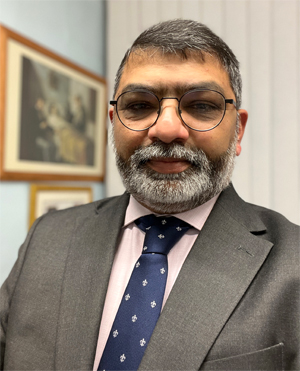
Dileep Lobo, Professor of Gastrointestinal Surgery, University of Nottingham, delivered this year’s prestigious Pennington Lecture, on ‘Fluids, Electrolytes, Albumin and Outcome’.
Professor Lobo gave an inspiring and engaging lecture with the take-home message of the need to treat hypovolaemia appropriately without inundating the patient, use a balanced electrolyte solution such as Hartman’s rather than ‘ab-normal’ saline.

Kevin Wheelen, Professor of Dietetics, King’s College London, gave this year’s Keynote Lecture ‘Ultra-processed Food (UPF) and Gastrointestinal Disease’.
Kevin’s lecture was clearly well received and concluded that a diet high in UPFs seems to be associated with worse health although the reason is not clear. Whether it is due to additives or lack of nutrients in that diet remains to be proven.
The BAPEN 2024 Annual Conference concluded with a series of debates on the value of protein in clinical nutrition chaired by Pete Turner. Pete was joined by Mike Stroud, Kevin Whelan, Anne Holdoway, Dileep Lobo and Priya Mistry to debate the use of high protein substances.
The three debates focused on the problems associated with high protein intakes especially in the metabolically stressed, as well as the need to be aware of when a high protein intake is justified. Speakers also looked at the reasons why high protein intake in older adults does not reduce the incidence of sarcopenia.
The take-home messages from the session that closed the Conference included the conclusion that high protein intakes can be harmful in the metabolically stressed but are likely to be beneficial in patients recovering from acute illness or starvation. It was agreed that there is no evidence that high protein intake reduces risk of sarcopenia in older adults. Resistance exercise combined with a normal protein intake is likely to be optimal in older adults.
The BAPEN Programmes would like to extend sincere thanks to all those involved in organising symposia for this year’s BAPEN 2024 Conference with multi-disciplinary representation from each of the following organisations:

BAPEN Awards and Recognitions
Presented by Dr Nick Thompson, President.
John Lennard-Jones Medal
The John Lennard Jones Medal is the highest accolade that the Association can bestow and was awarded to Kate Hall for her significant and consistent contribution to BAPEN over many years:
 Kate Hall, BAPEN Communications Officer
The Roll of Honour was introduced in 2008. This is the gift of the Council for any member who has given ‘over and above’ for BAPEN in the preceding year. The 2024 Roll of Honour was presented to:
Sheldon Cooper, University Hospitals Birmingham
Alison Culkin, St Marks Hospital, London
Daniel Rogers, University Hospitals of Leicester
Jane Fletcher, University Hospitals Birmingham
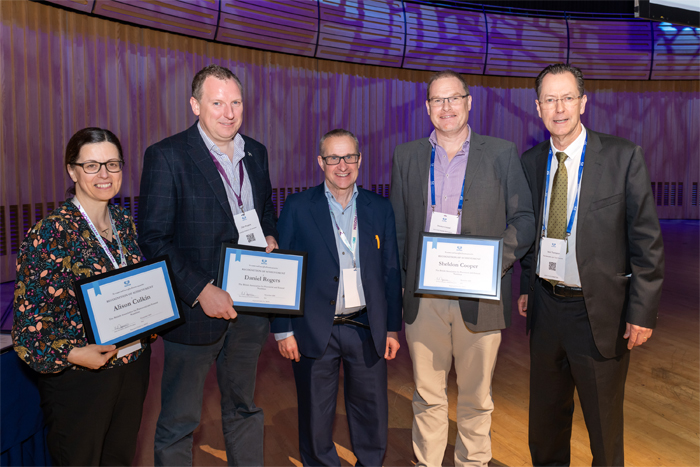 L-R: Alison Culkin; Daniel Rogers; Pete Turner; Sheldon Cooper; Nick Thompson
BAPEN’s Best Oral award was presented to Mary Fee for the presentation of: ‘Evaluating a Dietetic-led Gastrostomy Replacement Service’.
The Professor RG Clark Best Poster Prize was presented to lead author Katerina Belogianni for the poster entitled ‘Feasibility of Incorporating a Cognitive Behavioural Therapy (CBT) for Irritable Bowel Syndrome (IBS) App alongside Dietary Counselling’.
Highly commended posters were also recognised and awarded to:
Helen Harrison for her abstract ‘Developing a Guideline to Support a Reduction in Plastic Feeding Ancillaries used within Community Home Enteral Feeding’ and Uchu Meade for the abstract ‘Identifying Learning Gaps: A comprehensive learning needs assessment for pharmacy professionals working in clinical nutrition’.
The Pamela Harris Medal Lecture was awarded to Angela Cole for the presentation of her abstract ‘Development and Implementation of a Formal Transition Pathway for Adolescents and Young Adults on Home Parenteral Support in a UK Intestinal Failure Unit’.
BAPEN Medical awarded the Powell-Tuck Prizes for the best abstract submitted by a doctor in training to:
Daniel Ashmore, University of Sheffield for this work ‘Malnutrition in Emergency General Surgery: Who do we feed and why?’
The PENG Award is an annual suportive educational grant supported by Abbott, Fresenius Kabi and Nutricia who each receive £500 sponsorship.
Many clinicians are implementing fabulous initiatives in their local hospitals but don't ever think to share their great work. To encourage more clinicians to publish work this year the PENG Award will be given to the highest scoring abstract accepted for the BAPEN Conference where the first author is a PENG member and has not previously had an abstract accepted for the BAPEN Conference. This year PENG awarded 3 winners:
Christine McColgan, Ulster Hospital, for her abstract ‘Getting to the Gut of the Problem – The impact of dietetics in a gastroenterology ambulatory hub’.
Kirstie Allan, NHS Lanarkshire, for her abstract ‘Development of a Pilot Equation Using Mid-upper-arm Circumference for Estimating Energy Requirements in Place of Weight-based Equations.'
Maria de los Angeles Garcia Alcaide, University Hospitals of Leicester, for her abstract ‘Impact of Adult Complex Medicine Dietetic Service on Patient’s Clinical Outcomes’.
BAPEN introduced the Student Award in 2014. This award is open to any student nurse, dietitian, medic or pharmacist who has made a significant contribution in the field of nutrition which may be worthy of recognition (e.g. an audit, change of practice or project). Recipients of the 2024 Award were:
Colette Kirk, Newcastle University
Daniel Ashmore, University of Sheffield
Congratulations to all our Award Winners!