New guidance from BAPEN and the British Dietetic Association (BDA) provides comprehensive, evidence-informed support for professionals working with tube-fed children, young people and adults who are considering or using blended diet.
The 2026 Practice Toolkit reflects the evolving evidence and practice around blended diet, and is designed to support informed choice, shared decision-making and person-centred care across the life course.
What is blended diet?
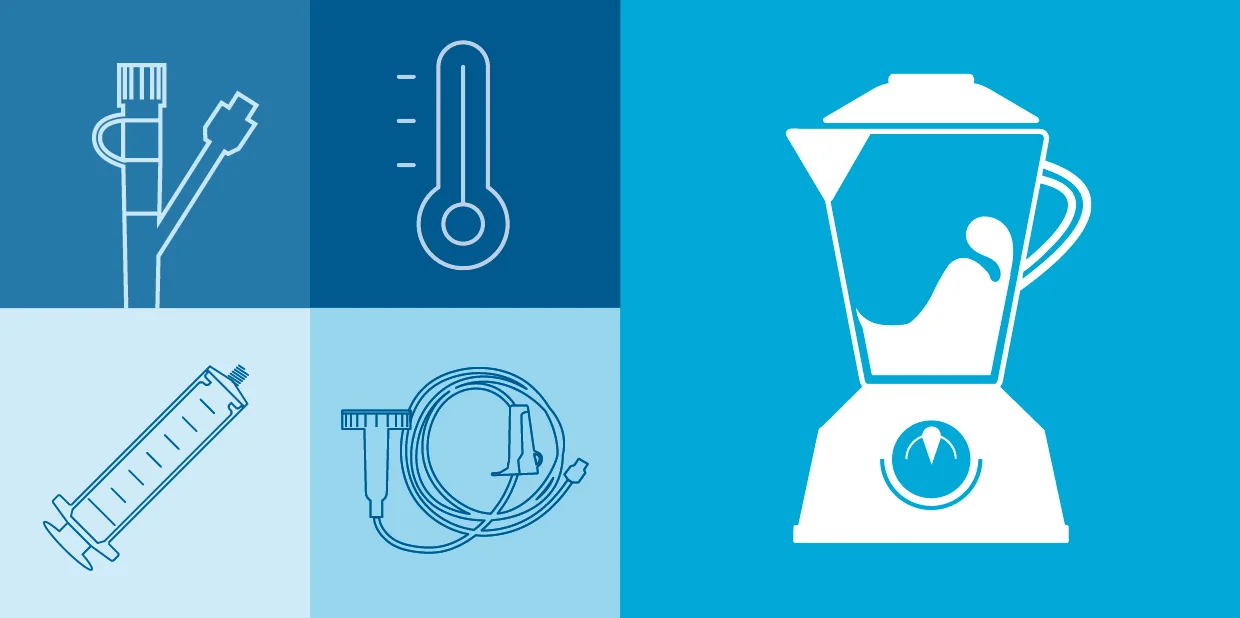
Blended diet refers to food and drink blended to a consistency that can pass through an enteral feeding tube. It can provide all or part of a person’s nutrition and can also be used alongside commercial enteral formula, with people able to move between different approaches as their circumstances, preferences and clinical needs change.
About the 2026 Practice Toolkit
Developed collaboratively by BAPEN and the BDA, the 2026 guidance replaces the 2019 Policy Statement and 2021 Practice Toolkit. It brings together updated evidence, professional expertise and the experiences of tube-fed people and their families, informed by a scoping review of the literature, a UK professional survey, a survey of tube-fed people and their families, practitioner roundtables and case studies.
The new edition reflects how blended diet practice has continued to evolve. For the first time, the Toolkit explicitly addresses blended diet in adult services as well as paediatric practice, recognising both children using blended diet transitioning into adult services and adults initiating conversations about blended diet as a tube-feeding option.
Supporting informed choice and professional confidence
Only 18%
76%
Only 48%
At its heart is a commitment to informed choice and shared decision-making. The guidance states that tube-fed people should be made aware that blended diet is an available choice and supported by the healthcare professionals involved in their care to consider whether it is right for their individual circumstances.
The evidence informing the Toolkit highlights why professional awareness and support matter. In the patient and public engagement survey informing the guidance, only 18% of families first heard about blended diet from a healthcare professional, compared with 45% who heard about it from other families and 41% who found information online. More than three quarters (76%) reported being self-taught in giving blends through a feeding tube, while only 48% of professionals surveyed felt confident supporting blended diet.
The Toolkit seeks to help bridge that gap, giving professionals evidence-informed guidance and practical resources to support conversations and care in practice.
Who is the Toolkit for?
The updated toolkit provides practical guidance for professionals across health, education and care settings, covering shared decision-making, nutrition and hydration, food safety, equipment, administration and monitoring. It is designed as a practical resource for dietitians, nurses, carers, education staff, respite providers and the wider multidisciplinary team, providing evidence-informed guidance to support informed choice and person-centred care.
It also addresses how blended diet can be supported beyond the home, including in schools, respite care hospitals and holidays.
Explore the new blended diet Practice Toolkit and supporting resources
This edition was funded by the British Dietetic Association, through its Paediatric and Parenteral and Enteral Nutrition Specialist Groups, and BAPEN, through its British Enteral Therapy Alliance Special Interest Group and Parenteral and Enteral Nutrition Specialist Group, which is as a core group.

