
Marsden, in collaboration with BAPEN, has today launched a new device designed to tackle one of the most persistent challenges in UK health and care: the delayed and inconsistent identification of malnutrition.
The M100 Assess is a weighing and nutritional assessment tool developed to support more reliable and efficient use of Malnutrition Universal Screening Tool (‘MUST’) – BAPEN’s nationally recognised, NICE-recommended screening tool – within routine clinical practice. By embedding nutritional screening into the everyday act of weighing, the device aims to make it easier for healthcare professionals to identify patients at risk earlier and more consistently.
“Too often, malnutrition is only identified once it has already begun to impact recovery and outcomes. Improving consistency in nutritional screening is a critical step in shifting care towards earlier intervention.”
Said Dr Nick Thompson, BAPEN President and Consultant Gastroenterologist.
“We’re pleased to support the introduction of the M100 Assess as a practical solution that helps embed best practice into routine care.”
The M100 Assess was developed around the realities of frontline care, informed by feedback from nurses and doctors on the barriers to consistent screening. Designed to address practical challenges in implementation, it combines weight measurement with automated calculation of key screening metrics, including automatic imperial-to-metric conversions, reducing reliance on manual processes and simplifying workflow. A step-by-step process for ‘MUST’ and waist-to-height ratio (WHtR) guides users through each stage, helping save time, reduce duplication, minimise error and support more consistent and complete nutritional assessment data capture at the point of care. The inclusion of WHtR alongside body mass index (BMI) also provides additional insight into metabolic risk without adding complexity to clinical workflows.
“The M100 Assess was developed by listening to nurses and doctors and designing around the realities of frontline care. Our focus was to create a tool that is intuitive to use, easy to embed in routine practice and capable of supporting more consistent nutritional screening across busy clinical settings.” said Lewis Davis, General Manager, Marsden. “Features such as automatic imperial to metric conversions save users time and improve accuracy to quickly record nutritional assessment values.”
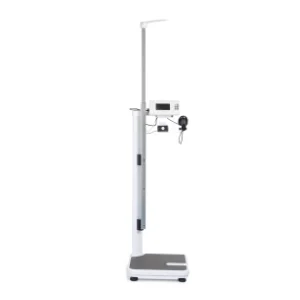
Why Marsden’s ‘MUST’ Scales?
Marsden’s ‘MUST’ scales streamline nutritional screening at the point of weighing by automatically calculating the BMI component of the ‘MUST’ score, reducing manual calculation steps, minimising transcription error, and saving clinical time. For healthcare professionals already integrating weighing into their workflow, screening begins the moment a patient steps on the scale — making them particularly practical in high-volume settings such as hospital wards, GP surgeries, and care homes.
The ‘MUST’ Scale Does Not Replace the ‘MUST’ Tool
Marsden’s ‘MUST’ scales are a complementary aid — they do not replace the validated ‘MUST’ tool, nor the clinical judgement, documentation, and management guidelines that accompany it. ‘MUST’ remains a five-step process with steps 2 and 3 still requiring clinical assessment which cannot be automated by a weighing scale. The complete ‘MUST’ tool, Explanatory Booklet, training resources, and management guidelines remain essential and are freely available at www.bapen.org.uk.
When Is Each Most Appropriate?
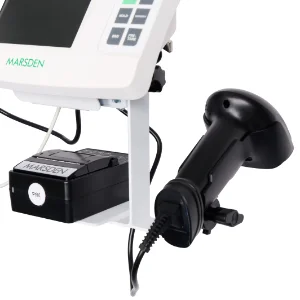
Marsden’s ‘MUST’ scales are most valuable as a workflow aid when:
- Routine, repeated weighing is already part of care (e.g. ward rounds, clinic appointments, care home monitoring)
- Time saving by auto-calculating BMI calculation at the point of measurement
The full ‘MUST’ tool (online & paper version) remains the recommended approach in all settings, and is especially important when:
- Audit and reporting — the standard tool generates a documented, traceable record that is often required for clinical audit, CQC inspections, or organisational compliance purposes
- MDT or handover contexts — where a completed paper or digital form needs to accompany a patient record or be shared across a care team
- Training and education — the full tool is essential for teaching HCPs to understand and apply each step of the scoring process, rather than relying on an automated output
- Alternative measurements are needed – where weight and height cannot be directly obtained
- Full documentation of the screening process is required
- Remote or telehealth consultations — where screening is being completed without the patient being physically present
‘MUST’ remains a vital tool for nutritional assessment in whichever form HCPs prefer to use it. Whether using the standard tool, a digital platform, or Marsden’s ‘MUST’ scales, what matters most is that screening is carried out consistently, acted upon appropriately, and supported by the full suite of BAPEN guidance.
Disclaimer
The M100 Assess device is manufactured and marketed by Marsden. BAPEN will receive a portion of the revenue from all M100 Assess sales, in recognition of BAPEN’s collaboration and the integration of ‘MUST’ in the device.

